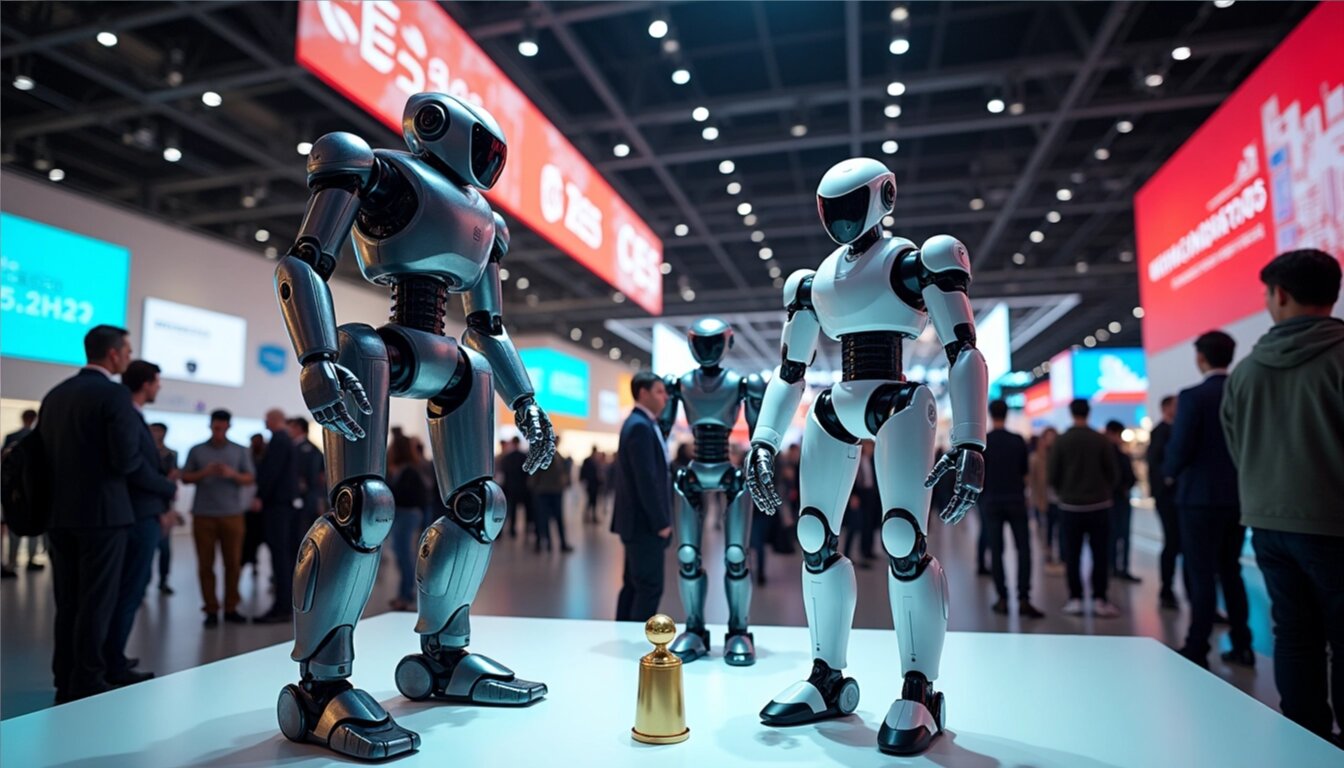
CES 2026 marked a watershed moment for humanoid robotics when the show floor transformed from speculative demonstrations into a battleground of production-ready platforms with concrete deployment timelines. For the first time in consumer electronics history, humanoid robots dominated an entire product category with 38 official exhibitors—more than half from Chinese manufacturers—showcasing everything from $16,000 compact manipulators to $150,000+ industrial powerhouses winning industry awards.
The strategic significance extends beyond booth counts. Boston Dynamics' Atlas won Best Robot Award with Hyundai's announcement of 30,000 annual units by 2028, representing the US robotics industry's first concrete mass-production commitment for humanoid platforms. Meanwhile, Chinese manufacturers including AgiBot, Unitree, and state-backed Beijing Humanoid Robot Innovation Centre arrived with verified production shipments already exceeding 5,000 units globally, backed by 7,705 Chinese humanoid patents filed over five years compared to just 1,561 US patents according to Morgan Stanley analysis.
This comparison analyzes all major humanoid robot platforms exhibited at CES 2026, providing specifications, pricing, deployment status, and strategic context for organizations evaluating commercial humanoid robot procurement decisions.
CES 2026 Humanoid Robotics Overview
Exhibition Statistics
Total Humanoid Robot Exhibitors: 38 companies Chinese Manufacturers: 21 exhibitors (55% of category) US/Western Manufacturers: 17 exhibitors (45% of category) Award Winner: Boston Dynamics Atlas (Best Robot Award) Verified Production Shipments: 10,000+ units across multiple manufacturers
Geographic Distribution
Chinese Contingent (21 companies):
- Unitree Robotics (Hangzhou)
- AgiBot (Shanghai)
- EngineAI (Shenzhen)
- Beijing Humanoid Robot Innovation Centre (X-Humanoid)
- Booster Robotics
- Fourier Intelligence
- Galbot
- Noetix Robotics
- Deep Robotics
- UBTech Robotics
- Plus 11 additional Chinese manufacturers
US/Western Companies:
- Boston Dynamics (Massachusetts, Hyundai subsidiary)
- 1X Technologies (California)
- NEURA Robotics (Germany)
- Humanoid (UK)
- Generative Bionics (Italy)
- LG Electronics (South Korea)
- Plus additional Western exhibitors
Industry Context
CES 2026 coincided with NVIDIA CEO Jensen Huang's proclamation that robotics has reached its "ChatGPT moment"—suggesting the technology inflection point where capabilities cross commercial viability thresholds. Supporting evidence includes:
- Boston Dynamics' first concrete production timeline (30K units/year by 2028)
- AgiBot's verified 5,000+ robot shipments globally
- Unitree's mass-production focus with Robot-as-a-Service model
- NVIDIA's full-stack robotics ecosystem launch (Cosmos Reason 2, Isaac GR00T N1.6)
- Integration with 2M+ robotics developers and 13M+ AI builders through Hugging Face partnership
The shift from research prototypes to production platforms represents fundamental market transition, though significant questions remain about actual deployment ROI, task capability validation, and enterprise integration complexity.
Complete Platform Comparison Matrix
| Platform | Manufacturer | Origin | Height | Weight | Price | Status | Key Feature | Target Market |
|---|---|---|---|---|---|---|---|---|
Atlas | Boston Dynamics/Hyundai | USA | ~150cm | 89kg | Not disclosed | Production 2026 | 30K units/year by 2028, Award winner | Industrial/Automotive |
Unitree G1 | Unitree Robotics | China | 127cm | 35kg | $16,000 | Shipping now | Compact, martial arts demo, foldable | Mass market/Industrial |
Unitree H2 | Unitree Robotics | China | Full-size | TBD | TBD | Showcased 2026 | Enhanced dynamics, industrial focus | Industrial applications |
Unitree R1 | Unitree Robotics | China | TBD | TBD | TBD | Showcased 2026 | Third platform in lineup | TBD |
AgiBot A2 | AgiBot | China | 169cm | 69kg | TBD | Shipping (5,000+ units) | Hospitality helper, Genie Sim 3.0 | Commercial services |
AgiBot X2 | AgiBot | China | TBD | TBD | TBD | Showcased 2026 | Bionic interaction focus | Commercial interaction |
AgiBot G2 | AgiBot | China | TBD | TBD | TBD | Showcased 2026 | Home and research scenarios | Home/Research |
EngineAI T800 | EngineAI | China | 185cm | 85kg | $25,000-$80,000 | June 2026 delivery | 8-hour runtime, 450 N·m torque | Industrial/Manufacturing |
EngineAI PM01 | EngineAI | China | 138cm | 40kg | $12,000-$13,700 | Shipping now | First front-flip humanoid | Commercial/Research |
EngineAI SE01 | EngineAI | China | 170cm | 55kg | $20,000-$30,000 | Available | Natural gait, CCTV debut | General purpose |
Tiangong Walker | Beijing Humanoid Innovation | China | TBD | TBD | Not disclosed | Showcased 2026 | "One brain, many machines" coordination | Industrial/Manufacturing |
UBTech Walker S2 | UBTech Robotics | China | TBD | TBD | TBD | Production (1,000th unit Dec 2025) | Established production | Service/Industrial |
Deep Robotics X30 | Deep Robotics | China | TBD | TBD | TBD | Showcased 2026 | Upgraded quadruped/humanoid | Industrial inspection |
Deep Robotics M20 Pro | Deep Robotics | China | TBD | TBD | TBD | Showcased 2026 | Wheeled-legged hybrid | Complex terrain |
LG CLOiD | LG Electronics | South Korea | Wheeled | TBD | Not disclosed | Showcased 2026 | Home helper, slow but functional | Consumer home |
NEURA 4NE1 | NEURA Robotics | Germany | TBD | TBD | ~$70,000 (est) | Third generation | Porsche design, 100kg lift, tactile skin | Industrial/Premium |
1X Neo | 1X Technologies | USA | TBD | TBD | $20,000 | Launched Oct 2025 | First multi-modal home helper | Consumer home |
Humanoid HMND 01 Alpha | Humanoid | UK | 2.2m | TBD | TBD | Showcased 2026 | Towering wheeled platform, 7-month build | Industrial/Research |
Gene.01 | Generative Bionics | Italy | TBD | TBD | TBD | 2026 deployment | AMD-backed, shipyard deployment | Industrial/Maritime |
Detailed Platform Analysis
Winner: Boston Dynamics Atlas (Hyundai)
Award: CES 2026 Best Robot Award
Strategic Significance: Boston Dynamics' Atlas won CES's top humanoid robot award and represents the first concrete US mass-production commitment with Hyundai's 30,000 annual units by 2028 target. The fully electric production version marks transition from decades of DARPA-funded research to actual commercial deployment.
Key Specifications:
- Height: Approximately 150cm
- Weight: 89kg
- Actuation: Fully electric (new generation, replacing hydraulic)
- AI Partnership: Google DeepMind integration
- Production: Boston headquarters facility
- Deployment: 2026 fleets committed to Hyundai RMAC and Google DeepMind
Technical Capabilities:
- Human-like walking demonstrated in live CES stage performance
- Near-industrial readiness validated by Hyundai manufacturing partnership
- Integration with Spot and Stretch robots for comprehensive automation ecosystem
- NVIDIA AI stack for training and deployment
- Designed for automotive manufacturing applications initially
Competitive Position: Atlas represents technical excellence with multi-decade refinement, backed by Hyundai's automotive manufacturing expertise and capital. The 30,000 units/year target by 2028 suggests genuine scale ambitions, though pricing remains undisclosed and likely premium positioning above $100,000 per unit.
Critical Assessment:
- Strengths: Award-winning demonstration, proven reliability, world-class engineering, automotive industry backing, concrete production timeline
- Limitations: No public pricing, all 2026 production committed (no general availability), premium positioning limits addressable market, US manufacturing costs higher than Chinese competitors
Deployment Timeline: 2026 (committed customers only), broader availability 2027+
As analyzed in my comprehensive humanoid robot platform comparison, Atlas represents the technical benchmark but faces Chinese competition at 50-75% lower price points.
Chinese Market Leader: Unitree Robotics
Models Exhibited: G1, H2, R1
Company Overview: Unitree dominated CES 2026 floor space with martial arts and boxing demonstrations featuring G1 humanoids in BattleBots Arena. The company shipped approximately 4,200 units in 2025 according to Omdia analysis, establishing leadership in actual customer deployments.
Unitree G1 Specifications:
- Height: 127cm (most compact commercial platform)
- Weight: 35kg
- Price: $16,000 (global), $70,000 (US market - pricing discrepancy noted)
- Status: Shipping immediately
- Key Features: Foldable design, high-speed martial arts capabilities, quick-swappable batteries, depth perception
- Payload: 2kg (limitation for certain applications)
- Walking Speed: 2 m/s
Unitree H2 (New at CES 2026):
- Full-size industrial platform
- Enhanced motion performance and dynamic capabilities
- Targets industrial inspection and manipulation
- Payload: 15kg
- 360-degree panoramic perception
- Specifications not fully disclosed
Business Model Innovation: Unitree announced Robot-as-a-Service (RaaS) model, exporting full-plant automation solutions overseas. This shift from product sales to service contracts suggests confidence in reliability and reduces customer capital requirements.
Competitive Advantages:
- Lowest current price at $16,000 (some markets)
- Compact 127cm form factor ideal for confined spaces
- Proven with 4,200+ units shipped (largest deployment base)
- Immediate availability (no waiting for production ramp)
- Established service infrastructure
Critical Assessment:
- Strengths: Market leader by shipment volume, proven reliability, lowest price point, immediate availability, compact design
- Limitations: 2kg payload too low for many industrial tasks, older computing architecture, incremental innovation versus breakthrough technology, US pricing inconsistency ($16K vs $70K)
CES 2026 Impact: Boxing and martial arts demonstrations generated massive crowds but raised questions about practical task validation versus spectacle marketing
Chinese Production Scale Leader: AgiBot
Models Exhibited: A2 Series, X2 Series, G2 Series
Company Background: Founded by Peng Zhihui (former Huawei "Genius Youth" recruit), AgiBot used CES 2026 to officially enter US market after verifying 5,000+ robots manufactured and shipped globally. This production scale exceeds many established competitors.
AgiBot A2 Specifications:
- Height: 169cm
- Weight: 69kg
- Price: Not disclosed
- Status: Production and shipping
- Primary Role: Hospitality helper for museums, showrooms, commercial spaces
- Sensors: 360-degree LiDAR and HD cameras
- Navigation: Autonomous with human remote control backup for safety
Genie Sim 3.0 Platform: Open-source training platform built on NVIDIA Isaac Sim enabling A2 to learn complex physical tasks from video demonstrations in digital environment before real-world deployment. This mirrors learning approach significantly reduces physical robot training time.
Product Portfolio Strategy:
- A2 Series: Commercial services (museums, retail, hospitality)
- X2 Series: Bionic interaction focus (human-like engagement)
- G2 Series: Home and research scenarios (consumer/academic markets)
Competitive Position: AgiBot's 5,000+ verified shipments represent genuine production scale, positioning company between research-focused startups and mass-market leaders. The multi-model portfolio targets different market segments simultaneously.
Critical Assessment:
- Strengths: Verified 5,000+ production units, open-source training platform, diverse product portfolio, US market entry, hospitality deployment experience
- Limitations: CES demonstrations used remote control for safety (not fully autonomous), pricing not disclosed, primary applications focus on low-complexity tasks, commercial viability not proven at scale
Strategic Insight: AgiBot represents China's production manufacturing advantages—ability to ship thousands of units while Western competitors remain in pilot phases
Chinese Aggressive Innovator: EngineAI
Models Exhibited: T800, PM01, SE01, SA01
Company Overview: EngineAI emerged as technical innovator with breakthrough achievements including world's first humanoid front flip (PM01, February 2025) and natural gait technology praised by NVIDIA researcher Jim Fan as having "swag." Founded October 2023 from XPeng spinout, company has launched four production models in 14 months.
T800 Specifications (Flagship):
- Height: 185cm (tallest commercial platform)
- Weight: 85kg
- Price: $25,000-$80,000 (configuration dependent)
- Peak Torque: 450 N·m (industry-leading)
- Runtime: 8 hours (solid-state battery)
- AI Compute: NVIDIA Jetson Thor (2,000 TOPS)
- Status: June 2026 first deliveries
- Key Innovation: First solid-state power battery for humanoid robots (5kWh)
PM01 Specifications:
- Height: 138cm
- Weight: 40kg
- Price: $12,000-$13,700
- Achievement: World's first humanoid front flip
- Status: Shipping now, bestseller on JD.com
- Monthly Sales: 500+ units reported
SE01 Specifications:
- Height: 170cm
- Weight: 55kg
- Price: $20,000-$30,000
- Key Feature: End-to-end neural network gait system
- Cultural Impact: CCTV New Year's Gala debut
- Status: Available
Technical Differentiators:
- End-to-end neural network locomotion (MIT Cheetah Software derived)
- No traditional 6-axis force-torque sensors (cost reduction through neural estimation)
- Self-manufactured harmonic joint modules
- Open-source GitHub repositories (engineai_humanoid)
- 8-hour runtime addresses critical operational constraint
Funding and Partnerships:
- $140-180M raised
- Major investors: JD.com, NVIDIA ecosystem, CATL Capital, Baidu Ventures
- Strategic partnerships: NVIDIA (computing), JD.com (distribution), Amazon (logistics deployment)
Competitive Advantages:
- 25% pricing discount versus Western competitors
- Industry-leading 8-hour runtime
- Open-source customization
- Breakthrough gait technology
- Strong technical innovations (front flip, solid-state battery)
Critical Assessment:
- Strengths: Technical innovation leader, aggressive pricing, longest runtime, open-source access, verified partnerships with major tech companies
- Limitations: Unproven field deployment record (new company), limited manipulation validation versus locomotion demos, June 2026 T800 delivery risk, geopolitical constraints for international expansion
CES 2026 Presence: EngineAI showcased full product line emphasizing T800's industrial capabilities and runtime advantages
For comprehensive analysis of EngineAI's technical innovations and competitive positioning, see my detailed article on EngineAI's rapid rise in humanoid robotics.
State-Backed Platform: Beijing Humanoid Robot Innovation Centre (X-Humanoid)
Model: Tiangong Walker Series
Organizational Structure: State-backed innovation center focused on establishing industry standards and building open-source technology ecosystem. Represents Chinese government's strategic robotics initiative.
Tiangong Platform Capabilities:
- "One brain, many machines" coordination architecture
- Multiple robots controlled through single AI system
- Applications: Manufacturing sorting, repetitive assembly, heavy-duty industrial tasks
- Key Innovation: Cross-scenario transfer learning (same model operates in factories, malls, homes without retraining)
Strategic Significance: X-Humanoid aims to set industry standards rather than maximize commercial sales. The open-source approach and government backing suggest long-term strategic positioning for Chinese robotics ecosystem development.
CES 2026 Demonstration: Showcased industrial coordination scenarios with multiple Tiangong walkers performing synchronized tasks, emphasizing fleet management capabilities over individual robot performance.
Critical Assessment:
- Strengths: Government backing ensures sustained funding, cross-scenario transfer learning addresses major deployment challenge, open-source ecosystem benefits entire industry
- Limitations: Not optimized for commercial sales, specifications not fully disclosed, government association may limit international adoption
Established Production: UBTech Robotics
Model: Walker S2
Milestone: Produced 1,000th Walker S2 humanoid at Liuzhou manufacturing facility (December 2025)
Company Background: UBTech represents established Chinese robotics company with multi-year production history, transitioning from educational robots to commercial humanoid platforms.
Walker S2 Applications:
- Service robotics
- Industrial inspection
- Commercial environments
- Retail and hospitality
Competitive Position: UBTech's 1,000-unit production milestone demonstrates genuine manufacturing capability and customer acceptance, though volume remains below leaders like Unitree (4,200 units) and AgiBot (5,000+ units).
Critical Assessment:
- Strengths: Established production infrastructure, proven manufacturing processes, diversified product portfolio beyond humanoids
- Limitations: Lower production volume than competitors, less technical innovation spotlight, limited international presence
Terrain Specialist: Deep Robotics
Models: X30 (upgraded), M20 Pro
Technology Focus: Engineering-oriented approach emphasizing wheeled-legged hybrid platforms for complex industrial terrain navigation.
M20 Pro Capabilities:
- Wheeled-legged structure for balance on complex terrain
- Industrial inspection applications
- Rough surface navigation
- Dynamic stability in unstructured environments
Competitive Differentiation: Deep Robotics targets niche applications where terrain complexity demands wheeled-legged hybrid designs rather than purely bipedal humanoids. This focus on specific use cases rather than general-purpose platforms reduces competitive pressure.
Critical Assessment:
- Strengths: Specialized terrain capabilities, proven industrial applications, engineering-first approach
- Limitations: Smaller market than general-purpose humanoids, less consumer appeal, limited scalability beyond industrial niches
Western Premium Entry: NEURA Robotics (Germany)
Model: 4NE1 (Third Generation)
Design Partnership: Studio F.A. Porsche
Key Specifications:
- Lift Capacity: 100kg (industry-leading)
- Tactile "Skin": Advanced force sensing across body
- AI Integration: NVIDIA Isaac GR00T
- Price: Estimated ~$70,000
- Target: Premium industrial applications
European Positioning: NEURA represents Western premium segment, competing on design quality, safety certifications, and European manufacturing rather than price competitiveness with Chinese platforms.
Competitive Advantages:
- Porsche design aesthetic appeals to premium customers
- 100kg lift capacity exceeds most competitors
- Tactile skin technology addresses safety and manipulation precision
- European regulatory compliance and certifications
- Local manufacturing and service for European customers
Critical Assessment:
- Strengths: Premium design and engineering, highest lift capacity, European manufacturing and support, advanced tactile sensing
- Limitations: Higher pricing than Chinese competitors, smaller production volume, limited deployment validation, niche market positioning
Consumer Home Focus: LG CLOiD (South Korea)
Model: CLOiD Wheeled Humanoid
Target Market: Consumer home applications
CES 2026 Demonstration: Live demo showed CLOiD making breakfast, retrieving wet towel, and loading washing machine. Performance revealed both capabilities and limitations.
Performance Observations:
- Speed: Slow (30 seconds to fold pre-laid rectangular towel)
- Tasks: Basic manipulation of household objects
- Reliability: Functional but not production-ready speed
- Form Factor: Wheeled base (not bipedal walking)
Market Strategy: LG's consumer electronics expertise positions CLOiD for mass-market home deployment, but CES demonstration exposed significant performance gaps versus industrial platforms.
Critical Assessment:
- Strengths: LG brand recognition and consumer distribution, home environment focus, established electronics manufacturing
- Limitations: Very slow task execution, wheeled design limits terrain capability, consumer price point unclear, safety concerns for home use, functionality doesn't justify purchase yet
Industry Expert Concern: Jeff Burnstein (Association for Advancing Automation): "Home is very unstructured" - highlighting safety challenges for consumer robots versus controlled industrial environments
US Home Robot Pioneer: 1X Technologies Neo
Status: First multi-modal home helper robot launched October 2025
Specifications:
- Price: $20,000
- Target: Consumer home applications
- Achievement: First to market with commercially available home humanoid
Market Significance: 1X's October 2025 launch preceded CES 2026 but established pricing and capability baseline for home humanoid robots. The $20,000 price point represents target for consumer affordability.
Competitive Position: Early mover advantage in home market, but faces competition from LG, potential Tesla Optimus consumer variants, and Chinese manufacturers expanding into consumer segments.
Critical Assessment:
- Strengths: First to market home humanoid, $20,000 consumer price point, US-based manufacturing and support
- Limitations: Limited deployment data, home environment unstructured nature poses challenges, unclear ROI for consumers versus hiring human help
UK Rapid Development: Humanoid HMND 01 Alpha
Specifications:
- Height: 2.2m (towering platform)
- Form Factor: Wheeled humanoid
- Development Timeline: 7 months from concept to CES showcase
- Origin: UK startup
Strategic Significance: HMND 01 Alpha's 7-month development timeline demonstrates rapid prototyping capabilities enabled by modern simulation tools, open-source components, and AI-accelerated development.
Competitive Position: Wheeled design sacrifices bipedal locomotion for stability and payload capacity. The 2.2m height suggests industrial applications requiring reach rather than human-scale environments.
Critical Assessment:
- Strengths: Rapid development demonstrates agile engineering, wheeled stability, exceptional height for reach applications
- Limitations: Not bipedal (reduces environment compatibility), limited information on capabilities, startup execution risk, unclear commercial pathway
AMD-Backed Industrial: Generative Bionics Gene.01 (Italy)
Specifications:
- Origin: Italy
- Backing: AMD financial and technical support
- Deployment: Scheduled 2026 in shipyards and industrial environments
- AI Training: AMD cloud-based GPUs
Technical Approach: Generative Bionics CEO Daniele Pucci: "This allows us to customize the next generation of the models on their GPUs" - indicating deep AMD integration for AI training and customization.
Market Focus: Shipyard deployment suggests focus on heavy industrial applications requiring robustness, reliability, and specialized task capabilities rather than general-purpose platforms.
Competitive Differentiation: AMD backing provides alternative to NVIDIA-dominated robotics AI ecosystem, potentially offering cost or performance advantages through AMD GPU infrastructure.
Critical Assessment:
- Strengths: AMD partnership provides computing infrastructure, industrial deployment focus reduces consumer market complexity, European manufacturing
- Limitations: Limited public information, AMD GPU ecosystem smaller than NVIDIA for robotics, shipyard niche limits scalability
Technology Platform Analysis
NVIDIA's Robotics Ecosystem Dominance
Announced at CES 2026:
- Cosmos Reason 2: Vision language model for robot perception
- Isaac GR00T N1.6: Humanoid whole-body control foundation model
- Hugging Face Integration: Connecting 2M robotics developers with 13M AI builders
- Growth Metric: Robotics fastest-growing category on Hugging Face platform
Industry Impact: NVIDIA's full-stack robotics ecosystem announcement positions company as "Android of robotics" - providing compute, simulation (Isaac Sim), training models, and deployment infrastructure used by majority of CES 2026 exhibitors.
Partnership Highlights:
- Boston Dynamics (Atlas AI training)
- AgiBot (Genie Sim 3.0 built on Isaac Sim)
- EngineAI (Jetson Thor computing)
- NEURA (Isaac GR00T integration)
- Caterpillar (industrial robotics)
- LG (consumer robotics)
Competitive Moat: NVIDIA's comprehensive ecosystem creates switching costs for robotics manufacturers. Training models on Isaac Sim, deploying on Jetson platforms, and using GR00T foundation models locks companies into NVIDIA stack.
AMD Alternative: Generative Bionics' AMD partnership suggests potential competitive pressure, but NVIDIA's head start and ecosystem depth provide substantial advantages.
China's Patent and Production Advantages
Patent Filing Analysis (Morgan Stanley, December 2025):
- Chinese entities: 7,705 humanoid-related patents (5 years)
- US entities: 1,561 humanoid-related patents (5 years)
- Ratio: China filing 4.9x more patents than US
Production Capability: Chinese manufacturers demonstrated verified production shipments:
- AgiBot: 5,000+ units
- Unitree: 4,200+ units (2025)
- UBTech: 1,000+ units (Walker S2)
- EngineAI: 500-1,000+ units projected (2025)
US Production:
- Boston Dynamics: 30,000/year target by 2028 (not yet producing at scale)
- 1X Technologies: Limited production (specific numbers not disclosed)
Strategic Implications: China's production advantage stems from manufacturing ecosystem, lower labor costs, government support, and aggressive scale-up timelines. US companies face higher manufacturing costs and more conservative production ramps.
Open-Source vs Proprietary Strategies
Open-Source Platforms:
- EngineAI (GitHub repositories, full customization)
- AgiBot (Genie Sim 3.0 training platform)
- X-Humanoid (open-source ecosystem focus)
Proprietary Platforms:
- Boston Dynamics (closed control systems)
- LG (consumer electronics approach)
- 1X Technologies (protected IP)
Strategic Trade-offs:
Open-Source Advantages:
- Accelerates developer ecosystem growth
- Enables customization for specific applications
- Reduces customer lock-in concerns
- Attracts academic research partnerships
- Community contributions improve platform
Open-Source Risks:
- Competitors can leverage improvements
- Harder to maintain differentiation
- Revenue model shifts to services/support
- Intellectual property protection challenges
Proprietary Advantages:
- Protects core differentiation
- Stronger IP moat
- Higher-margin business model potential
- Controlled quality and user experience
Proprietary Risks:
- Slower ecosystem development
- Customer lock-in resistance
- Reduced research community engagement
- Integration complexity with third-party systems
Market Segment Analysis
Industrial Manufacturing
Leading Platforms:
- Boston Dynamics Atlas (automotive focus, 30K/year by 2028)
- EngineAI T800 (8-hour runtime, 450 N·m torque)
- Unitree H2 (industrial inspection, 15kg payload)
- AgiBot Raise A1 (3C manufacturing, automotive assembly)
- NEURA 4NE1 (100kg lift capacity)
Key Requirements:
- 8+ hour runtime for shift operation
- Payload capacity 10-50kg
- Precision manipulation
- Safety certifications (ISO 10218)
- Integration with MES/ERP systems
- Reliability and uptime guarantees
Competitive Dynamics: Industrial segment prioritizes reliability and total cost of ownership over purchase price. Boston Dynamics' premium positioning justified by proven reliability. Chinese manufacturers compete on price and faster deployment timelines.
Deployment Timeline:
- 2026: Pilot programs (10-50 robots per facility)
- 2027-2028: Volume deployments (100-1,000 robots per facility)
- Post-2028: Full factory automation (1,000+ robots)
Commercial Services (Hospitality, Retail, Museums)
Leading Platforms:
- AgiBot A2 (hospitality helper, museum deployment)
- Unitree G1 (retail guidance, compact form factor)
- EngineAI SE01 (general commercial services)
- UBTech Walker S2 (service robotics)
Key Requirements:
- Natural human interaction
- Safe operation near customers
- Aesthetic design (not intimidating)
- 2-4 hour operation between charges acceptable
- Language processing and conversation
- Navigation in crowded environments
Competitive Dynamics: Commercial services prioritize customer experience and safety over maximum capabilities. Lower price points ($10,000-$30,000) enable faster adoption. Asian markets more accepting of service robots than Western markets initially.
Deployment Status:
- Current: Museums, showrooms, controlled retail environments
- Near-term (2026-2027): Hotels, restaurants, shopping malls
- Future (2028+): Mass retail adoption if ROI proven
Consumer Home
Leading Platforms:
- 1X Neo ($20,000, first to market)
- LG CLOiD (LG brand recognition)
- AgiBot G2 (home scenarios)
- Potential: Tesla Optimus (if consumer variant released)
Key Requirements:
- Safety around children and elderly
- Compact size for home navigation
- Simple setup and operation
- Price under $25,000 for mass market adoption
- Reliable household task execution
- Privacy and security guarantees
Competitive Challenges:
- Speed: LG demonstration showed 30-second towel folding (too slow)
- Safety: Home environments unstructured, children unpredictable
- Value Proposition: $20,000 robot vs. $15-25/hour human help unclear ROI
- Tasks: Limited to simple manipulation, not complex cooking or care
- Regulations: Consumer product safety standards more stringent than industrial
Market Readiness: Consumer home segment least ready for mass adoption. Technical capabilities lag customer expectations, pricing too high for mainstream households, and safety concerns require additional validation.
Realistic Timeline:
- 2026-2027: Early adopters and wealthy households
- 2028-2030: Broader adoption if price drops to $10,000-15,000 range
- Post-2030: Mass market if tasks expand and reliability proven
Research and Development
Leading Platforms:
- Boston Dynamics Atlas (research partnerships)
- EngineAI T800 Open Source ($33,000)
- Humanoid HMND 01 Alpha (UK academic partnerships)
- Various Chinese platforms with open-source access
Key Requirements:
- Low-level control access
- Simulation environment integration
- Customization flexibility
- Comprehensive documentation
- Academic pricing programs
- Research collaboration support
Competitive Dynamics: Research segment values openness and customization over production polish. Open-source platforms (EngineAI, AgiBot) competitive with premium platforms (Boston Dynamics) for academic applications.
Geographic Market Analysis
China Domestic Market
Advantages:
- 21 of 38 CES exhibitors Chinese (home-field manufacturing)
- Government support through subsidies and procurement
- Lower labor costs enable aggressive pricing
- Established supply chains in Shenzhen, Shanghai, Hangzhou
- Cultural acceptance of robotics in public spaces
Production Scale:
- Total Chinese humanoid shipments 2025: ~10,000-12,000 units
- Projected 2026: 20,000-30,000 units across all manufacturers
- Government targets: Establish global leadership by 2027
Market Challenges:
- Intense domestic competition (21+ companies)
- Price pressure reduces margins
- International expansion faces geopolitical barriers
- Need to prove ROI beyond government-supported deployments
United States
Advantages:
- Boston Dynamics technical leadership and Hyundai backing
- Large industrial market (automotive, logistics, manufacturing)
- High labor costs justify robot ROI
- Strong AI/software ecosystem
- Premium pricing sustainable for proven reliability
Challenges:
- Only 1-2 domestic manufacturers at scale (Boston Dynamics, 1X)
- Chinese imports face potential restrictions
- Higher manufacturing costs
- Conservative enterprise procurement (slower adoption)
- Safety/liability concerns more stringent
Market Dynamics:
- Premium segment (Boston Dynamics) vs. Chinese import competition
- Automotive industry first major deployment (Hyundai, potential Tesla)
- Logistics (Amazon, others) second major segment
- Consumer market delayed versus Asia
Europe
Advantages:
- NEURA Robotics (Germany) and Generative Bionics (Italy) domestic options
- Strong industrial base (automotive, manufacturing)
- High labor costs justify automation
- Quality and safety culture aligns with premium platforms
Challenges:
- Limited domestic manufacturers
- Chinese competition on price
- Regulatory complexity (CE marking, safety standards)
- Smaller market than US or China individually
- Fragmented by country regulations
Market Outlook: Europe likely focuses on premium industrial segment, with domestic manufacturers (NEURA, Generative Bionics) competing against Chinese imports and Boston Dynamics.
Pricing and Total Cost of Ownership
Price Point Categories
Budget Tier ($10,000-$20,000):
- Unitree G1: $16,000
- EngineAI PM01: $12,000-$13,700
- 1X Neo: $20,000
- Target: Small businesses, research, early adopters
Mid-Tier ($20,000-$40,000):
- EngineAI SE01: $20,000-$30,000
- EngineAI T800 Basic: $25,000
- EngineAI T800 Open Source: $33,000
- EngineAI T800 Pro: $38,500
- Target: Industrial pilots, commercial services
Premium Tier ($50,000-$100,000+):
- EngineAI T800 Max: $50,000
- NEURA 4NE1: ~$70,000 (estimated)
- Unitree G1 (US pricing): $70,000
- Boston Dynamics Atlas: Not disclosed (likely $100,000-$150,000+)
- Target: Large enterprises, critical applications
Total Cost of Ownership Factors
Beyond Purchase Price:
- Integration: $50,000-$200,000 per deployment (MES, WMS, safety systems)
- Infrastructure: $50,000-$200,000 (facility modifications, charging, network)
- Training: $20,000-$80,000 (staff training, procedure development)
- Annual Maintenance: $2,000-$5,000 per robot
- Software/Support: $1,000-$10,000 per robot annually
- Insurance: $10,000-$50,000 annually (liability coverage)
- Supervision: Initial 1 operator per 2-3 robots until autonomy improves
3-Year TCO Example (10 robots at $30,000 each):
- Initial Purchase: $300,000
- Integration/Infrastructure: $150,000
- Training: $50,000
- Annual Operating (3 years): $120,000
- Total 3-Year TCO: $620,000
- Per Robot-Hour: $3.44 (assuming 8-hour shifts, 250 days/year)
ROI Calculation Framework
Labor Cost Comparison:
- Human worker (fully loaded): $25-$40/hour (US), $8-15/hour (China)
- Robot (TCO-based): $2.50-$5/hour depending on utilization
- Breakeven: 12-24 months at high utilization rates
Productivity Assumptions:
- Current: Robots achieve 60-80% of human productivity
- 2027: Projected 80-90% (software improvements)
- 2028+: Potential 90-100% for structured tasks
Risk Factors:
- Integration complexity may extend timelines 3-6 months
- Task capability gaps require human backup
- Downtime costs if robots fail during production
- Regulatory changes could impose new requirements
Strategic Recommendations by Organization Type
Large Enterprise (1,000+ Employees)
Recommended Approach:
- 2026: Pilot with 5-10 Boston Dynamics Atlas or EngineAI T800 Pro
- 2027: Expand to 50-100 units if ROI validated
- 2028: Scale to 500+ units across multiple facilities
Platform Selection:
- Primary: Boston Dynamics Atlas (proven reliability, premium support)
- Alternative: EngineAI T800 (cost-performance, 8-hour runtime)
- Avoid: Budget platforms (insufficient capability for complex tasks)
Budget Allocation:
- $500,000-$1M for initial pilot (10 robots, integration, training)
- $5M-$10M for 2027 expansion
- Plan $50M+ for full-scale deployment
Mid-Size Company (100-500 Employees)
Recommended Approach:
- 2026: Pilot with 2-3 EngineAI T800 Basic or Unitree H2
- 2027: Expand to 10-20 units if successful
- 2028: Evaluate full production line automation
Platform Selection:
- Primary: EngineAI T800 ($25,000-$38,500 range)
- Alternative: Unitree H2 (when available with pricing)
- Consider: AgiBot for commercial service applications
Budget Allocation:
- $100,000-$200,000 initial pilot
- $500,000-$1M for 2027 expansion
- Negotiate volume pricing for larger deployments
Startup/Small Business (Under 100 Employees)
Recommended Approach:
- 2026: Single unit evaluation ($16,000-$30,000)
- 2027: 2-5 units if use case proven
- Avoid over-committing until ROI clear
Platform Selection:
- Primary: Unitree G1 ($16,000) if tasks compatible
- Alternative: EngineAI PM01 ($12,000-$13,700) for compact needs
- Stretch: EngineAI T800 Basic ($25,000) if budget allows
Budget Allocation:
- $30,000-$50,000 total initial investment
- Plan for integration complexity
- Accept higher risk for price advantage
Research Institution
Recommended Approach:
- Select platform with maximum customization access
- Prioritize open-source over commercial polish
- Engage vendor in research partnerships
Platform Selection:
- Primary: EngineAI T800 Open Source ($33,000)
- Alternative: Boston Dynamics Atlas (if partnership available)
- Consider: Multiple budget platforms for diverse experiments
Budget Allocation:
- $50,000-$100,000 per platform
- Allocate for simulation environment setup
- Plan for student/faculty training time
Industry Outlook and Predictions
2026 Market Evolution
Expected Developments:
- Boston Dynamics delivers first 1,000 Atlas units to Hyundai and Google DeepMind
- EngineAI T800 begins June 2026 deliveries and validates 8-hour runtime claims
- Unitree achieves 8,000-10,000 G1/H2 combined shipments
- AgiBot expands beyond 5,000 units to 8,000-10,000
- Industry consolidation begins (2-3 Chinese manufacturers acquired or fail)
Critical Inflection Points:
- First major deployment failure or accident will trigger regulatory scrutiny
- ROI validation from early Hyundai Atlas deployment influences enterprise adoption pace
- Price wars among Chinese manufacturers could drive sub-$10,000 platforms
- Safety incidents in consumer deployments may delay home robot adoption
2027-2028 Transition
Production Scale:
- Boston Dynamics: 10,000-15,000 units (building toward 30K/year)
- Chinese manufacturers combined: 50,000-80,000 units
- Global market: 80,000-120,000 humanoid robots deployed
- Market consolidation: 15-20 viable manufacturers down from 38+
Technology Advances:
- Battery runtime extends to 12-16 hours
- Manipulation dexterity approaches human hand capabilities
- AI training enables robots to learn new tasks in weeks versus months
- Fleet coordination and multi-robot collaboration becomes standard
Market Dynamics:
- Industrial segment reaches commercial maturity (proven ROI)
- Commercial services expand beyond pilots to volume deployments
- Consumer segment remains nascent (early adopters only)
- Regulatory frameworks emerge (safety standards, liability)
Long-Term Outlook (Post-2028)
Market Size Projections:
- 2028: 200,000-300,000 annual humanoid robot production globally
- 2030: 500,000-1,000,000 annual production
- Total installed base 2030: 1.5-2.5 million humanoid robots
Technology Convergence:
- Standardization of interfaces (charging, software, communication)
- Commodity pricing for basic platforms ($8,000-$12,000)
- Premium platforms command 3-5x premiums for superior capabilities
- Open-source platforms dominate developer mindshare
Workforce Impact: As detailed in my analysis of CES 2026 physical AI revolution and workforce displacement, humanoid robots will displace 2-5 million manufacturing and logistics jobs by 2030, while creating 500,000-1,000,000 robot supervision, maintenance, and programming roles.
Critical Success Factors
For Manufacturers
Must Execute:
- Reliability: 95%+ uptime required for industrial deployment
- Safety: Zero serious injuries in commercial deployments
- ROI: Demonstrate 18-24 month payback at scale
- Support: 24/7 service for production environments
- Integration: Turnkey MES/WMS connectors, not custom projects
Competitive Moats:
- Proprietary actuator technology (hard to replicate)
- AI training data and models (accumulates over time)
- Manufacturing scale (cost advantages)
- Service network (switching costs)
- Patent portfolio (defensive position)
For Enterprise Customers
Due Diligence:
- Pilot Before Scaling: Always run 6-12 month pilot with 2-10 units
- Task Validation: Test actual production tasks, not demonstrations
- Total Cost Analysis: Include integration, training, supervision, maintenance
- Vendor Stability: Assess financial health and long-term viability
- Exit Strategy: Plan for platform migration if vendor fails
Risk Mitigation:
- Negotiate performance guarantees in contracts
- Require vendor-provided integration support
- Plan for human backup during ramp period
- Budget 30% contingency for unexpected costs
- Join industry consortiums for shared learning
Transparency Note
This comparison is based on information publicly available as of CES 2026 (January 5-10, 2026) including:
- Official manufacturer announcements and press releases
- CES exhibition demonstrations and media coverage
- Industry analyst reports and patent analysis
- Verified production and shipment data where available
Data Limitations:
- Many platforms have incomplete specifications disclosed
- Pricing varies significantly by geography and configuration
- Production volumes reported by companies, not independently audited
- Real-world deployment performance may differ from demonstrations
- Regulatory and safety certifications status unclear for many platforms
Testing Note: No platforms were independently tested for this comparison. Analysis based on manufacturer claims, third-party demonstrations, and industry expert assessments. Organizations should conduct hands-on evaluations before procurement decisions.
Potential Biases:
- CrashBytes recently published detailed EngineAI analysis (may influence coverage depth)
- Western media sources may under-report Chinese innovations
- Manufacturer claims not independently verified
- CES demonstrations may not reflect production capabilities
Update Frequency: This comparison will be updated quarterly as new information becomes available, production volumes are verified, and deployment results emerge from early customers.
Conclusion: The Inflection Point Has Arrived
CES 2026 marked the transition from humanoid robots as research curiosities to commercial products with concrete deployment timelines, verified production volumes, and enterprise purchase commitments. The convergence of technical capability (NVIDIA AI infrastructure, breakthrough locomotion algorithms, 8-hour battery runtime) with manufacturing scale (China's 10,000+ annual production) and customer demand (Hyundai's 30,000/year commitment) represents the inflection point predicted by industry analysts.
However, substantial challenges remain. Boston Dynamics' award-winning Atlas represents technical excellence but lacks disclosed pricing and general availability. Chinese manufacturers demonstrate production capability and aggressive pricing but face international expansion barriers and manipulation capability questions. Consumer platforms show promise but require 3-5 years additional development before mass market readiness.
For enterprises making 2026 deployment decisions, the market offers genuine commercial options rather than vaporware, but requires careful platform selection based on specific applications, risk tolerance, and budget constraints. Organizations should begin with small pilots (2-10 robots), validate ROI in actual production environments rather than demonstrations, and maintain flexibility to adapt as the market rapidly evolves.
The humanoid robotics industry has moved from "if" to "when" and "which platform"—a fundamental shift that will accelerate deployment through 2026-2028 as early successes validate commercial viability and drive broader enterprise adoption.
Related Analysis
- EngineAI Rapid Rise - Deep Analysis of China's Fastest Humanoid Robotics Startup
- Humanoid Robot Platforms 2026 Comparison - EngineAI vs Unitree vs Tesla vs Boston Dynamics
- CES 2026 Physical AI Revolution - Workforce Displacement Analysis
- Prediction: Physical AI Robotics Mass Production Reaches Commercial Viability 2027
Last Updated: January 11, 2026