Quick Takeaways
What you'll learn in this article
- 1
Justin Hotard takes over Nokia, bringing AI and infrastructure insights from Intel.
- 2
William R. Wagner becomes CEO of Semrush, sharpening its digital marketing direction.
- 3
Susan Sheffield is set to lead GM Financial as auto tech finance modernizes.
- 4
David Boone steps in at Michaels, possibly signaling a digital transformation push. (source)
- 5
Low-Code/No-Code Tools: Analysts forecast that 70% of apps will be built with these platforms by EOY, empowering non-technical staff to prototype or even deploy full solutions.
Keep reading for detailed implementation, code examples, and real-world results
🧠 AI Redefines Developer Roles: From Coders to Builders
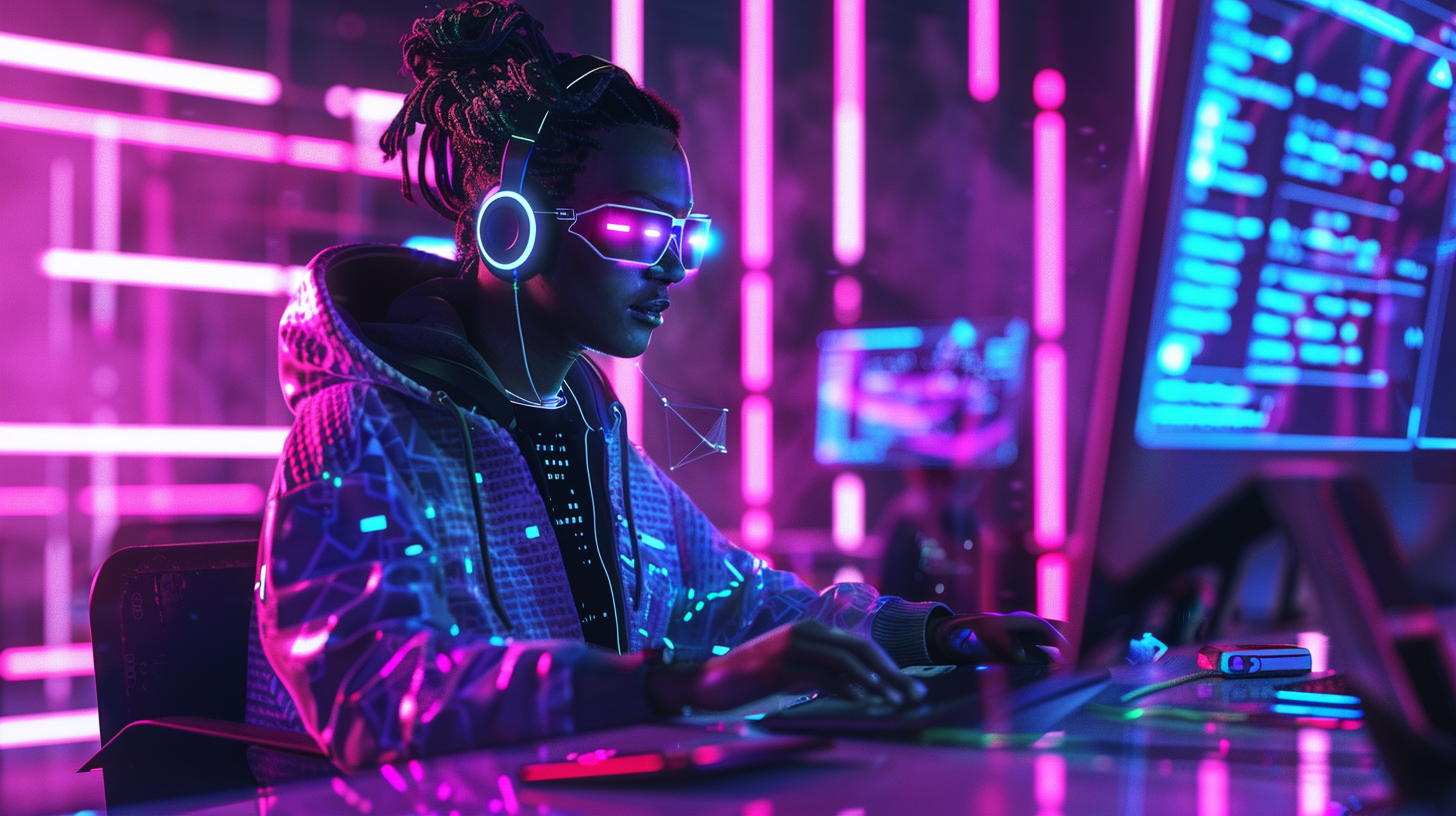
Artificial Intelligence continues to redefine the landscape of software development. Windsurf (formerly Codeium) CEO Varun Mohan envisions a future where developers transition into “builders,” leveraging AI to automate repetitive coding tasks and focus on higher-level problem-solving. This shift is exemplified by the rise of "vibe coding," where developers use AI prompts to generate code, enhancing productivity and innovation.
“AI allows people to make tools for themselves without realizing they’re creating software,” Mohan told Business Insider (source).
Windsurf’s growth—marked by $243 million in funding and rumored OpenAI acquisition talks—demonstrates this paradigm shift is not theoretical. It’s happening now, reshaping how teams ship products.
``AI-assisted software developer working with a holographic interface
🏗️ CoreWeave’s $1.7B Acquisition: Building the AI Stack
CoreWeave, known for its AI-optimized cloud infrastructure, is expanding vertically. In April, it acquired Weights & Biases—an MLOps powerhouse—for $1.7 billion.
This strategic move brings CoreWeave deeper into the software layer, complementing its NVIDIA GPU-powered data centers with developer-focused tooling. Now, it offers not just compute but the workflows and experiment tracking platforms developers rely on for deep learning.
CoreWeave plans to invest another $10 billion in 2025 to scale its infrastructure footprint. But the company faces pressure—77% of its 2024 revenue came from just two customers, with Microsoft making up 60%.
Still, with a 96 Relative Strength Rating and a stock price 25% above its IPO, CoreWeave is one of the most-watched AI infrastructure companies right now (source).
``High-tech data center infrastructure with glowing CoreWeave-branded racks
📉 Tariffs and Trade Wars: Tech Supply Chains Under Siege
Trade tensions between the U.S. and China are causing ripple effects across the tech ecosystem. With tariffs on Chinese products jumping to 145%, companies like Apple and Meta are urgently diversifying their supply chains.
Apple, for instance, is reportedly airlifting iPhones to India to avoid tariffs that could increase quarterly costs by $900 million (source).
This realignment isn't just logistical—it’s strategic. Supply chain fragility means delayed releases, rising costs, and in some cases, less budget for R&D—a move that could stall innovation cycles across consumer tech and semiconductors.
Meanwhile, companies like TSMC are betting on advanced packaging innovations, such as square-shaped panel-level packaging, to maintain their edge despite macroeconomic headwinds (source).
``U.S.-China tech trade war visualized with a circuit board split in conflict
👩💼 CEO Shifts Signal Strategic Redirection
2025 is shaping up as a pivotal year for executive reshuffling. Several tech and adjacent sector companies have brought in new leadership to steer through this evolving landscape:
-
Justin Hotard takes over Nokia, bringing AI and infrastructure insights from Intel.
-
William R. Wagner becomes CEO of Semrush, sharpening its digital marketing direction.
-
Susan Sheffield is set to lead GM Financial as auto tech finance modernizes.
-
David Boone steps in at Michaels, possibly signaling a digital transformation push. (source)
🎓 AI in Education: A National Imperative
A national shift is brewing in K–12 education. Over 200 CEOs, including Microsoft’s Satya Nadella and LinkedIn’s Ryan Roslansky, signed a letter urging U.S. governors to make computer science and AI part of high school graduation requirements (source).
With only 12 states mandating CS instruction today, this campaign marks a critical inflection point. It’s backed by data: CS grads earn 8% higher wages, and the courses especially benefit underrepresented groups.
Even the White House is taking note, with a new task force dedicated to early AI education and digital workforce readiness.
``Students learning AI from a teacher using holographic whiteboards
🧰 Software Development Trends to Watch
Beyond AI, the broader dev landscape is undergoing tectonic shifts:
-
Low-Code/No-Code Tools: Analysts forecast that 70% of apps will be built with these platforms by EOY, empowering non-technical staff to prototype or even deploy full solutions.
-
Serverless Architectures: The shift to function-based compute means faster, scalable deployments without managing infrastructure.
-
AI-Powered IDEs: GitHub Copilot, Cursor, and Windsurf are changing how code is written, reviewed, and optimized.
-
Ethical AI Design: Developers are expected to build systems that are interpretable, privacy-respecting, and fair.
(source)
``Modern no-code software development platform with AI interface
🔮 Final Thoughts
From developer redefinition to geopolitical turbulence, the 2025 tech landscape is transforming rapidly. For engineering leaders, founders, and investors, the challenge is to balance speed with strategy, leveraging AI’s power without being blindsided by policy, supply chain shocks, or outdated leadership models.